
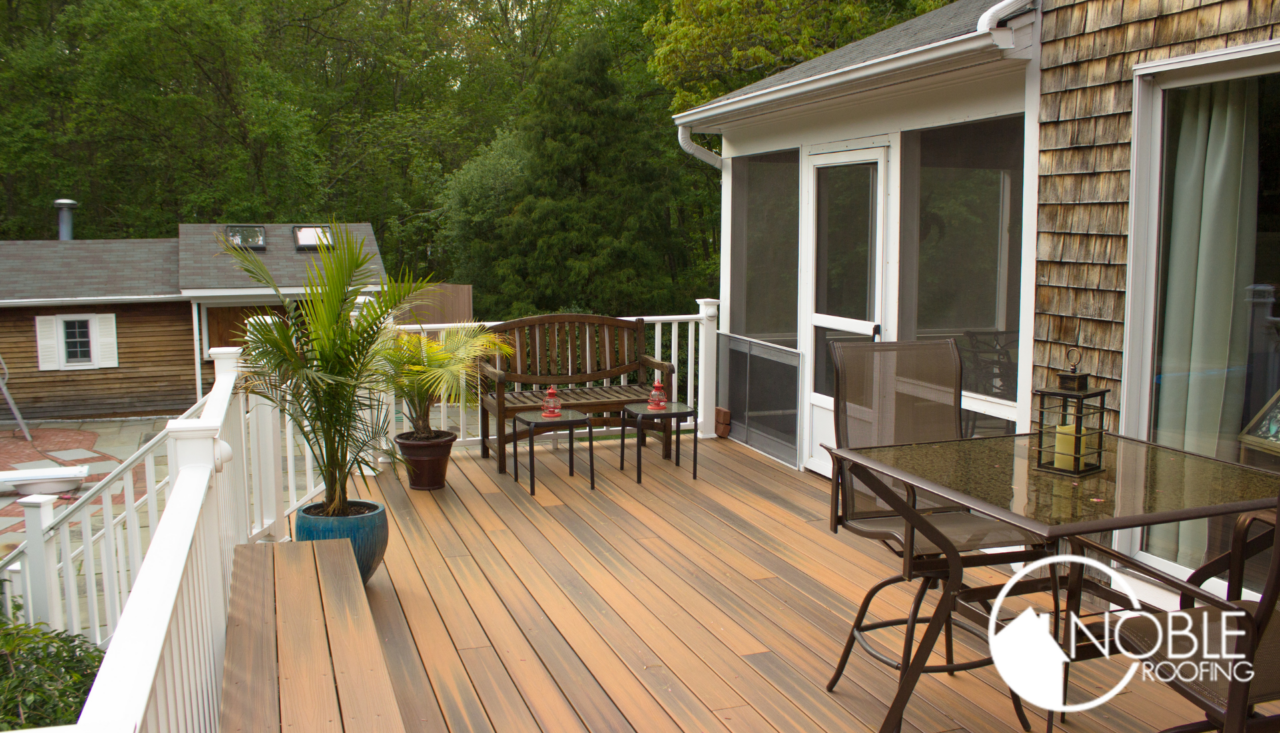
Waterproof Deck Membranes: What They Are and When to Consider One
An outdoor deck should be a place to relax, not a source of concern every time it rains. When a deck sits above a room, garage, or another area you want to keep dry, managing water becomes especially important.
A waterproof deck membrane can help protect the surface beneath it while providing a finished outdoor walking area. However, choosing the right system involves more than picking a color or covering an existing surface. The condition of the deck, its drainage, and the installation details all matter.
For Northern Virginia homeowners considering a deck renovation or addressing a leak, understanding how these systems work can help you decide what to discuss with a professional roofer like Noble Roofing.
What Is a Waterproof Deck Membrane?
A deck membrane is a protective layer installed over a prepared surface to help prevent water from reaching the materials below. These systems are commonly used on balconies, elevated decks, and roof decks.
Some vinyl deck membranes combine waterproofing with a finished surface designed for foot traffic. Rather than installing a waterproof layer and then a separate walking surface, the selected membrane can serve both purposes when it is approved for that use.
Not every waterproofing product is intended to remain exposed or support regular foot traffic. Before selecting a system, ask whether it is designed for your particular application and what supporting materials it requires.
Noble Roofing offers deck membrane services and identifies vinyl membranes as an option for protecting outdoor decking. A project evaluation can help determine whether this approach is suitable for your space.
When Is a Deck Membrane Worth Considering?
A waterproof membrane is particularly worth discussing when an outdoor deck or balcony sits above an enclosed area. In that situation, the deck surface is also part of the protection for the space below.
For example, a balcony above a garage needs more than an attractive finish. Its waterproofing must account for the surface, the connection to the house, the door threshold, and any railing attachments. Covering the middle of the deck without addressing those details leaves important parts of the system unresolved.
A membrane may also be an option when renovating an existing waterproof deck whose surface is worn or damaged. Before recommending replacement, the contractor should assess the existing materials and determine what preparation or repairs are necessary.
If your deck has open gaps between boards, do not assume that a sheet membrane can simply be installed over them. Vinyl membrane systems generally need a suitable, continuous supporting surface prepared according to the product’s requirements. Converting an open-board deck may involve additional construction rather than a straightforward surface installation.
Investigate Leaks Before Covering the Surface
If you have noticed water beneath a deck, staining in the room below, or deterioration around a doorway, the source should be investigated before a new membrane is installed.
Water may enter through a damaged surface, a seam, a railing penetration, or a connection where the deck meets the building. The visible stain does not necessarily identify the entry point, so a surface-only repair may not address the underlying issue.
A waterproof membrane is not a repair for weakened framing or damaged decking. Any underlying problems need to be evaluated and addressed as part of the project. Installing a new covering should follow appropriate preparation, not hide conditions that still require attention.
If you notice a soft area, loose railing, or another sign of possible structural deterioration, avoid using the affected area and arrange a professional evaluation.
Why Drainage Matters
Waterproofing and drainage work together. A membrane helps keep water from passing through the covered surface, while the deck’s slope and drainage details determine where that water goes.
A contractor should evaluate whether water can move toward the intended edge, drain, or outlet rather than collect in low areas or flow toward a doorway. The required slope and drainage arrangement depend on the selected system and the project design.
If your existing deck regularly holds puddles, ask how that condition will be addressed before installation. A new membrane alone does not necessarily correct the shape or slope of the underlying surface.
Drainage planning should also consider where discharged water will go. The goal is to manage water across the whole assembly, not move it from the deck into another problem area.
The Details Around Edges and Openings
A deck membrane is only one part of a complete waterproofing assembly. Seams, edges, walls, doors, and penetrations need details that work with the selected product.
Many sheet vinyl systems use heat-welded seams to join adjoining sections. Where the deck meets a wall or doorway, the membrane must be integrated with appropriate flashing and the surrounding building materials.
Railing attachments also deserve attention. Posts and fasteners can create openings through the waterproof surface, so the installation plan should explain how those locations will be protected. Some designs allow railings to attach at the side of the deck, reducing penetrations through the walking surface.
These details are a major reason to choose an installer familiar with the specific membrane system. An attractive surface does not tell you whether the concealed connections and transitions were completed correctly.
Choosing a Finish for Your Outdoor Space
Vinyl deck membranes are available in different colors and patterns, depending on the product line. A homeowner may be able to choose a finish that complements the siding, trim, railing, and overall style of the home.
Appearance should be considered alongside the intended use. Ask whether the product is suitable for the expected foot traffic, what surface texture it provides, and whether the manufacturer has restrictions involving furniture, grills, or other items you plan to place on the deck.
Review actual samples when possible rather than relying only on online images. Also ask how seams, edge trims, and transitions will look in the completed installation.
The best choice is a system that meets the waterproofing needs of the project and fits how you plan to use the space.
Low Maintenance Does Not Mean No Maintenance
A vinyl deck membrane can offer a relatively low-maintenance outdoor surface, but it still needs care. Follow the selected manufacturer’s instructions for cleaning, inspections, and any sealant maintenance.
Keep leaves and debris from accumulating around drainage points, and inspect the surface for damage. Pay particular attention to seams, wall connections, railing attachments, and other detailed areas.
Avoid dragging sharp or heavy objects across the surface. Some manufacturers caution against metal-edged snow shovels and sharp furniture edges because they can damage the vinyl. Check the product guidance before using cleaning chemicals, snow-removal tools, or protective mats.
If you discover a puncture, lifted seam, or other damage, contact a professional familiar with the system. An improvised patch or incompatible coating may complicate a proper repair.
What to Ask Before Installation
Start by asking which membrane product is being proposed and whether it is suitable for your deck’s use. Confirm what supporting surface it requires and how the contractor will evaluate the existing decking and structure.
Next, discuss drainage, door thresholds, wall connections, and railing attachments. Ask whether completing those details will require removing or modifying nearby siding, trim, doors, or railings, and whether that work is included in the estimate.
The written proposal should also explain removal of existing materials, surface preparation, repair allowances, disposal, and potential additional charges. If concealed damage is discovered, you should know how it will be documented and how additional work will be approved.
Finally, request the product and installation warranty details, along with maintenance instructions. Understanding coverage and care requirements before installation helps you make a more informed decision.
Explore Deck Membrane Options With Noble Roofing
Whether you are renovating a balcony, planning improvements to an elevated deck, or investigating water intrusion, a professional assessment is a useful starting point. The right solution depends on the entire assembly—not just the visible surface.
Noble Roofing serves customers throughout Virginia, Maryland, and DC and offers deck membrane services. Contact our team to discuss your outdoor space, ask about suitable options, and request a free quote.
A carefully planned waterproof deck system can combine a finished walking surface with protection for the materials below. Addressing preparation, drainage, and installation details from the beginning helps create a space you can use with greater confidence.