
Gutter Guards and Fall Leaves: What Homeowners Should Know Before Installing Them
Fall leaves can make a Northern Virginia neighborhood look beautiful, but they are less welcome inside your gutters. If you regularly deal with clogged gutters or water spilling over the edges, you may be considering gutter guards.
Gutter guards can help reduce the amount of leaves and debris entering your gutter system. However, they are not a one-size-fits-all solution, and installing them does not eliminate every maintenance task.
Before choosing a system, it helps to understand how different guards work, what kind of debris collects around your home, and whether your existing gutters need attention first. The experts at Noble Roofing can discuss these details with you and more while offering you a free quote for a gutter guard upgrade.
What Do Gutter Guards Actually Do?
Gutter guards are covers, screens, or inserts designed to limit debris entering gutters while allowing rainwater to flow through. Depending on the design, they may block larger leaves, filter smaller debris, or guide water around a covered edge.
Their purpose is to reduce debris buildup and make gutter maintenance more manageable. They do not replace the gutters themselves, correct every drainage problem, or guarantee that the system will never need cleaning.
Think of gutter guards as one part of your home’s water-management system. The gutters, downspouts, outlets, and guard installation all need to work together to collect water and direct it away from the house.
Start With the Trees Around Your Home
The debris falling onto your roof is an important factor when choosing gutter guards. Broad leaves, pine needles, seeds, and small twigs create different challenges, so a product that works well at one property may not be the best fit for another.
A screen with larger openings may keep many broad leaves out while allowing smaller material to pass through. Fine mesh can help block smaller debris, but its surface may still need cleaning when leaves, needles, or dirt accumulate on top.
For example, a home surrounded by pine trees needs a different evaluation than one where the main issue is large leaves collecting each fall. Ask your installer how the proposed guard handles the debris you actually see around your home.
Also consider nearby roof sections and valleys where runoff and debris may concentrate. Choosing a guard should involve looking at the whole roof and gutter layout, not just selecting a product from a sample display.
How Common Gutter Guard Styles Compare
Gutter guard designs differ in how they filter debris and admit water. The following table provides a general comparison, but performance also depends on the specific product, installation, and conditions around your home.
| Guard style | How it works | What to ask |
|---|---|---|
| Screen or perforated cover | Openings allow water into the gutter while blocking debris larger than those openings. | Can the leaves, needles, or seeds around your home pass through, and how is the gutter accessed for cleaning? |
| Mesh or micro-mesh | A woven filtering surface helps keep debris out while admitting water. | How fine are the openings, and what cleaning is needed when material collects on the surface? |
| Reverse-curve cover | A curved cover guides water toward an intake opening while directing some debris over the edge. | How does the system handle concentrated runoff, and how are the intake opening and gutter maintained? |
| Brush or foam insert | Material placed inside the gutter limits debris entry while leaving pathways for water. | How often must the inserts be removed, cleaned, or replaced? |
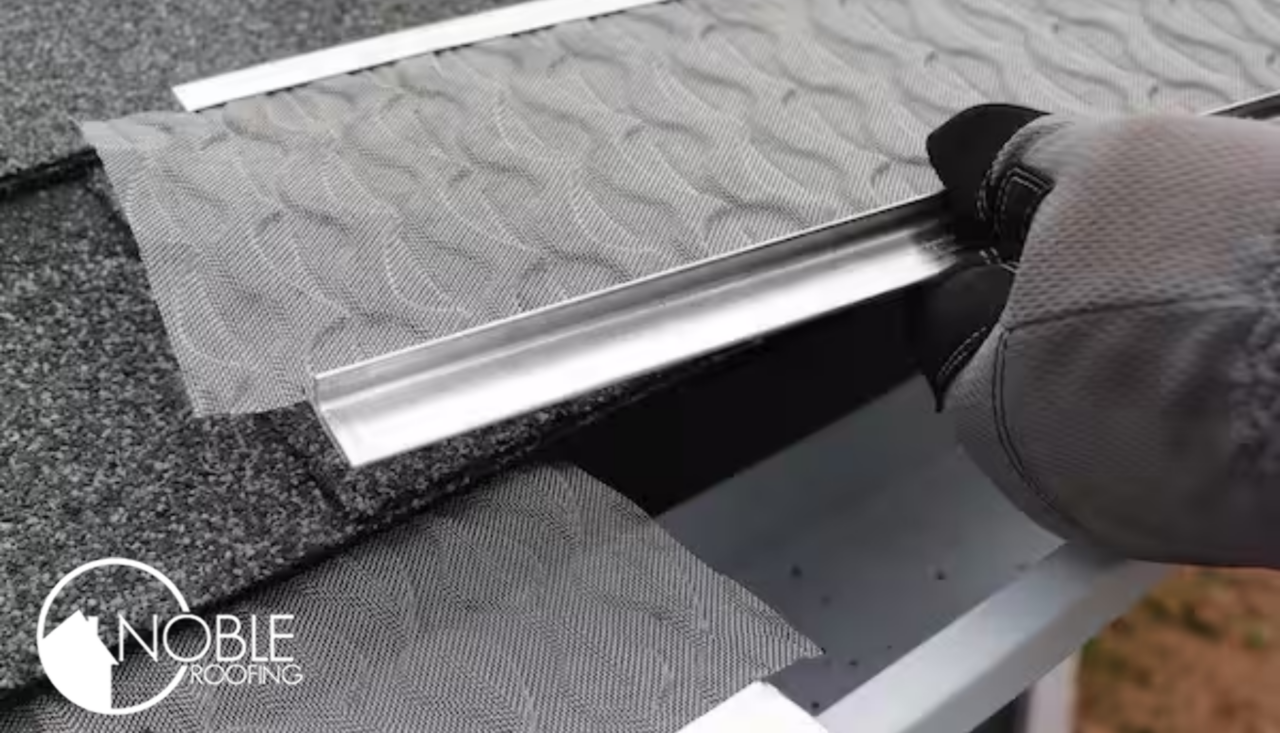
Noble Roofing offers gutter guard options including perforated aluminum and mesh. A professional evaluation can help you compare suitable choices for your gutters and the surrounding trees.
Do Gutter Guards Eliminate Cleaning?
No gutter guard should be treated as a guarantee that maintenance will never be needed. Guards can reduce the amount of debris entering the gutter, but leaves and other material may collect on the surface or around openings.
Small particles may also enter some systems, depending on the size of the openings and the installation details. If buildup interferes with water entering the gutter or moving through the downspout, cleaning may still be necessary.
Before purchasing, ask what routine maintenance the manufacturer recommends and how the installed system can be accessed. Find out whether the guards can be removed and reinstalled if the gutter needs cleaning or repair.
The realistic goal is easier, more manageable maintenance—not forgetting about the gutters altogether.
Check Your Existing Gutters First
Installing guards over a gutter system that already has problems may leave those problems unresolved. A clogged downspout, loose section, leaking joint, or unsuitable gutter slope needs attention independently of the guard.
Before installation, have the gutters and downspouts checked for existing debris and drainage issues. Ask whether cleaning, adjustment, resealing, or replacement is recommended and whether that work is included in the estimate.
If you have seen water spilling over during rain, describe where it happens. Overflow near a roof valley may require a different assessment than water backing up near a downspout.
A useful recommendation should explain whether the issue is debris, the condition of the gutters, concentrated runoff, or a combination of factors. Gutter guards are not automatically the answer to every overflow problem.
Why Installation Details Matter
Even a well-designed product needs to fit the gutter and roof configuration correctly. Gaps, poorly fitted corners, or unsecured sections can create places where debris enters or water bypasses the system.
Ask how the proposed guards will be attached and how corners, ends, and areas with concentrated runoff will be handled. Some systems attach to the gutter, while others involve the roof edge. Your contractor should explain the method used for the selected product.
If installation involves lifting or working around shingles, ask how the roof materials will be protected and whether the method is compatible with the applicable roofing requirements.
Clear installation details are more useful than a broad promise that a guard will work on every home.
What to Watch for After Installation
After the guards are installed, observe the system from a safe location during rain when practical. Look for water spilling over an edge, running behind the gutter, or collecting where it did not previously.
Following heavy leaf fall or a storm, check from the ground for visible piles of debris, displaced sections, or blocked outlets. If something looks unusual, contact the installer rather than climbing onto the roof to investigate.
Ask your contractor what signs indicate that cleaning or service is needed. A maintenance plan should account for the trees around your home and the behavior of the installed system, rather than assuming every property needs the same schedule.
Questions to Ask Before Choosing a System
Start with the exact product being proposed. Ask what materials it uses, what debris it is designed to block, and why the contractor recommends it for your property.
Then review the scope of work. Confirm whether gutter cleaning, downspout clearing, existing gutter repairs, and disposal of old guards are included. If only certain sections will receive guards, have those areas identified in writing.
Finally, request the warranty and maintenance information. Ask whether the warranty covers the product, installation, or both, and whether any clog-related coverage comes with exclusions or service requirements.
A clear proposal should help you understand what you are buying, what the system is expected to accomplish, and what responsibilities remain after installation.
Explore Gutter Guard Options With Noble Roofing
If fall leaves regularly collect in your gutters, a professionally selected guard system may help reduce debris buildup and simplify upkeep. The right choice starts with evaluating your existing gutters, surrounding trees, and drainage needs.
Noble Roofing provides gutter services in Northern Virginia and offers gutter guard options including perforated aluminum and mesh. Contact the team to discuss your home’s gutter concerns and request a free quote.
With realistic expectations and attention to installation and maintenance, gutter guards can be a useful part of keeping your home’s drainage system working as intended.