
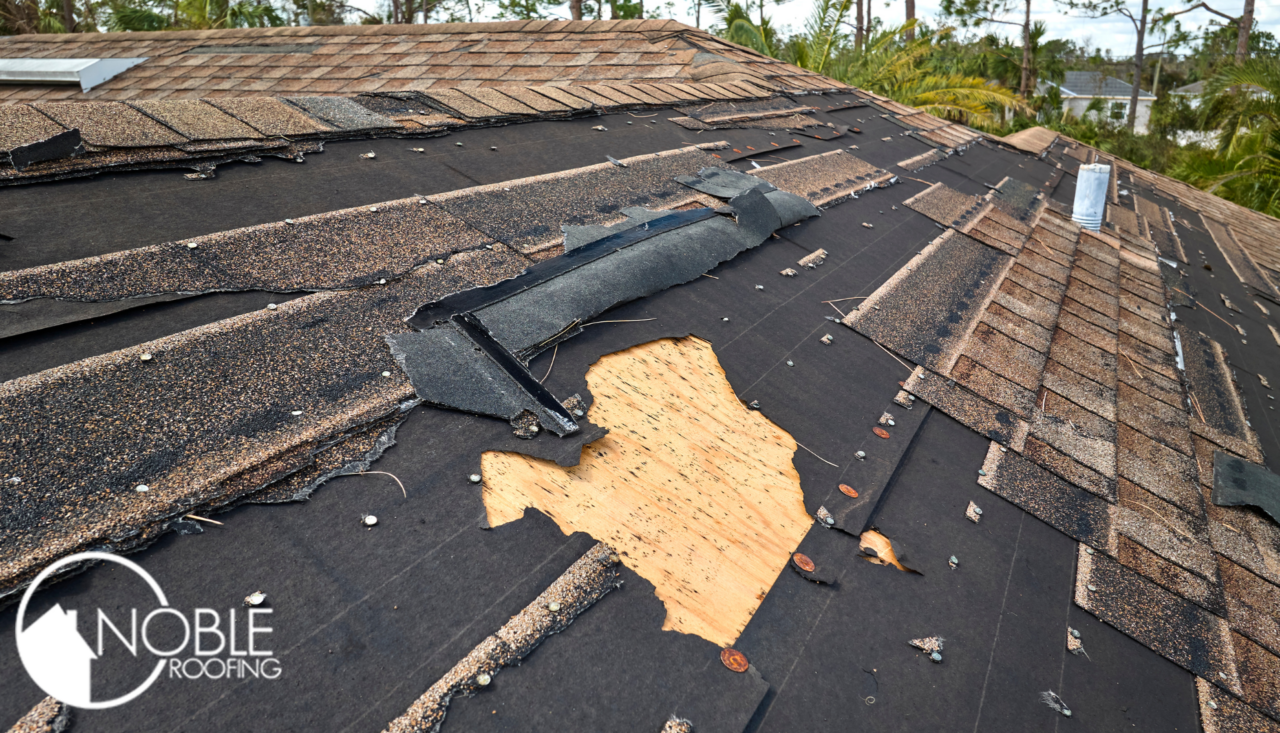
What Happens If Damaged Roof Decking Is Found During Replacement?
You have selected your shingles, reviewed the estimate, and scheduled your roof replacement. Then, after the old roofing materials are removed, your contractor reports that some of the wood underneath needs replacing.
This can be an unwelcome surprise, but discovering damaged roof decking does not automatically mean your entire roof structure needs rebuilding. The next steps depend on the location, extent, and cause of the damage.
For Northern Virginia homeowners, understanding how decking repairs are evaluated, documented, and priced can make this part of a roofing project easier to navigate. At Noble Roofing, we can speak with you about potential issues that occur during a roof replacement so you can be aware of all possible costs before proceeding.
What Is Roof Decking?
Roof decking, also called roof sheathing, is the supporting surface beneath the underlayment and roof covering. Depending on the home, it may consist of plywood, oriented strand board, or wood boards.
The decking provides a base for the roofing system and its fasteners. It is different from the rafters or trusses, which form the underlying roof structure.
When a contractor says that decking needs replacement, ask which materials are affected. Replacing a damaged section of sheathing is not the same scope of work as repairing framing, and the estimate should distinguish between them.
Why Damage May Not Be Visible Before Removal
An initial roof inspection can identify some warning signs, but shingles and underlayment cover much of the decking. Even when an attic is accessible, the view from below may not reveal every issue.
Removing the existing roof covering gives the contractor a clearer view of the supporting surface. Areas affected by moisture, deterioration, or unsuitable previous repairs may become apparent at that stage.
This is why a roof replacement estimate may include a decking allowance or a separate rate for additional repairs. It allows the contractor to explain how concealed conditions will be handled without claiming to know exactly what every covered section looks like.
If the initial inspection suggests possible decking problems, those concerns should be discussed before work begins. However, the full extent may still remain uncertain until removal.
What Does the Contractor Need to Evaluate?
Once the decking is exposed, the contractor should evaluate whether it provides a suitable base for the new roofing system. The assessment may include deterioration, damaged panels, loose sections, and the condition of existing boards or sheathing.
The contractor also needs to consider the selected roofing manufacturer’s requirements and applicable building requirements. A surface that supported an older roof may need preparation or modification for the proposed replacement system.
Discoloration alone does not explain the full condition of a piece of wood. Ask what the contractor observed and why replacement is recommended rather than relying only on a photo of a darkened area.
If the concern extends beyond the decking to rafters, trusses, or other structural components, the project may require a separate assessment and a broader repair plan.
Does Every Damaged Area Require a Whole New Deck?
Not necessarily. If damage is confined to a limited area and the surrounding material is suitable, the proposed work may involve replacing only the affected sections.
More extensive deterioration or an unsuitable existing substrate may require a larger scope. The recommendation should be based on the actual condition and installation requirements, not an assumption that every roof replacement needs all-new decking.
For example, a contractor might find damaged sheathing near a long-standing flashing leak while other areas remain serviceable. That finding calls for an explanation of both the localized decking repair and how the source of water intrusion will be addressed.
Ask the contractor to identify the affected areas and explain whether the recommendation involves localized repairs, broader sheathing replacement, or additional structural work.
Ask for Documentation Before Additional Work
Photos can help you understand conditions that are difficult to see from the ground. Ask for images showing the affected areas and a description of the problem.
The documentation should connect the findings to the proposed repair. You should understand which sections need attention, what materials will be installed, and how the contractor determined the quantity.
Agree on the notification and approval process before the project starts. If you will be away during installation, make sure the contractor has a reliable way to reach you and knows who is authorized to approve changes.
A clear process helps prevent a situation where necessary decisions are delayed or additional charges arrive without an explanation.
How Are Decking Repairs Priced?
Decking repair pricing depends on the material, quantity, access, and scope of work. Some proposals include a stated allowance, while others provide a unit rate for additional replacement.
For sheet decking, a contractor may quote a price per sheet. For board decking or more complex repairs, another pricing method may be appropriate. Ask whether the quoted rate includes removal, materials, installation, and disposal.
If an allowance is included, confirm how it is measured and how work beyond that allowance will be charged. Also clarify whether the quoted rate applies only to sheathing or includes any framing repairs.
A written change order should identify the additional scope and cost under the approval process established in your agreement. Avoid relying on a vague statement that repairs will be billed “as needed.”
Will Decking Repairs Delay the Project?
Additional work can affect the schedule, but the impact depends on what is found. A limited sheathing repair presents a different situation from damage requiring framing work, additional materials, or further professional evaluation.
Ask your contractor for an updated timeline once the condition is understood. The project should not move forward with covering an area that still requires evaluation or repair simply to preserve the original schedule.
If work must pause, discuss how the exposed areas will be protected and how weather changes will be handled. Your contractor should explain the immediate plan as well as the remaining steps.
Address the Cause, Not Just the Damaged Wood
Replacing damaged decking is only part of the solution when moisture caused the problem. The project should also address the identified entry point or other contributing condition.
Depending on the findings, that may involve flashing, roof penetrations, the roof covering, or an investigation of attic moisture conditions. The correct approach depends on the source rather than the appearance of the damaged wood alone.
Ask whether any recommended work falls outside the roofing contract. Interior repairs, insulation replacement, or specialized structural work may need a separate scope and contractor.
Prepare Before Your Roof Replacement Begins
The best time to discuss concealed damage is before the old roofing comes off. Review the decking allowance, additional repair rates, documentation expectations, and change-order process when comparing proposals.
You do not need to assume the worst or budget for an entirely new roof deck without evidence. You do need to understand what happens if the contractor discovers a condition that was not visible during the initial inspection.
Keeping those terms clear makes it easier to respond to legitimate findings and evaluate any proposed changes.
Discuss Your Roofing Project With Noble Roofing
Finding damaged decking during replacement can be frustrating, but a clear explanation and documented repair plan can help you understand the next steps.
Noble Roofing serves homeowners throughout Virginia, Maryland, and DC. Contact the team to discuss your roof replacement, request a free quote, and ask how potential decking repairs will be handled in your project proposal.
A successful roof replacement starts with more than new shingles. It also requires an appropriate supporting surface and a clear plan for addressing conditions discovered along the way.