Commercial Roof Repair: Types of Commercial Roofs, Materials, and Why Professional Expertise Matters
Commercial roofs do much more than keep rain out of a building. They protect inventory, equipment, employees, customers, tenants, and the day-to-day operations that keep a business moving. When a commercial roof develops a leak, ponding water, membrane damage, flashing failure, or another issue, delaying repairs can allow a relatively small problem to become a costly disruption.
However, commercial roof repair is not one-size-fits-all. Flat and low-slope roofing systems use different materials, installation methods, drainage designs, and repair approaches than most residential roofs. Understanding what type of roof is on your building—and hiring an experienced commercial roofing company to evaluate it properly—can make a meaningful difference in preventing recurring problems.
Why Commercial Roof Repairs Require a Specialized Approach
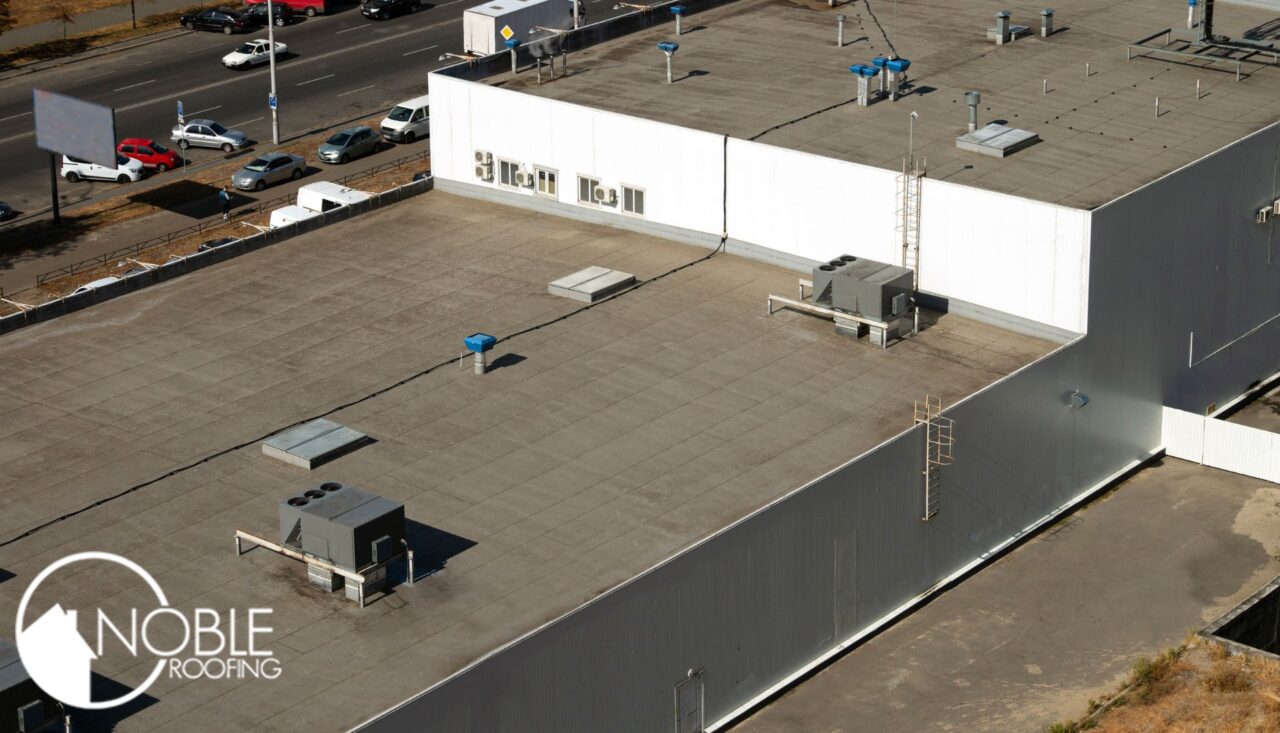
Many commercial buildings have flat or low-slope roof systems. Although these roofs may appear simple from the ground, they are carefully designed systems made up of membranes, insulation, seams, flashings, drains, penetrations, edge details, and protective coatings.
A leak seen inside the building is not always directly below the source of the problem. Water can travel beneath roofing membranes, through insulation, around rooftop equipment, or along structural components before it becomes visible indoors. That is why an effective repair begins with identifying the true source of moisture intrusion—not simply sealing the spot where water appears inside.
A professional commercial roof inspection should consider:
- The roofing system type and age
- Membrane condition, seams, and attachment method
- Flashing around walls, curbs, pipes, vents, skylights, and HVAC equipment
- Drainage conditions, including drains, scuppers, gutters, and ponding water
- Signs of trapped moisture beneath the roof surface
- Damage from foot traffic, weather, debris, or rooftop equipment work
- Whether a targeted repair, restoration, or replacement is the most cost-effective option
Common Types of Commercial Roofing Systems
Commercial properties can use several roofing systems, each with different performance characteristics and repair needs. The best repair method depends on the existing roof material, the nature of the damage, the building’s drainage system, and the roof’s overall condition.
Built-Up Roofing (BUR)
Built-up roofing, often called BUR, is one of the more traditional commercial roofing systems. It is made by layering bitumen—such as asphalt—with reinforcing fabric or felt. The roof is often finished with gravel, mineral surfacing, or a protective coating.
Because BUR roofs contain multiple layers, they can offer strong durability and redundancy. However, they may develop cracks, blisters, splits, loose surfacing, or flashing failures as they age. Repairing a built-up roof requires the right materials and techniques to restore the affected area without creating weak points in the surrounding system.
Modified Bitumen Roofing
Modified bitumen is an asphalt-based roofing material that is reinforced for flexibility and durability. It is commonly installed in rolls and may be applied using self-adhered sheets, cold adhesives, heat-welded seams, or other approved installation methods.
This type of roofing is often used on low-slope commercial buildings because it can perform well in changing weather conditions. Common repair needs include seam separation, punctures, cracks, blistering, damaged flashing, and deterioration around drains or roof penetrations.
EPDM Roofing
EPDM is a synthetic rubber roofing membrane, often recognized by its dark or black surface. It is widely used on commercial buildings because it is flexible, durable, and suited for many low-slope applications.
EPDM roof repairs may involve repairing punctures, securing loose seams, replacing damaged flashing, sealing penetrations, or addressing areas where the membrane has pulled away from edges or walls. Since adhesives, primers, tapes, and compatible membrane materials are essential to a long-lasting repair, it is important to use products designed specifically for the roof system.
TPO Roofing
TPO, or thermoplastic polyolefin, is a single-ply roofing membrane commonly used on commercial buildings. It is typically white or light-colored, which can help reflect sunlight and reduce heat absorption. TPO seams are generally heat-welded, creating a continuous waterproof surface when installed correctly.
Over time, TPO roofs may experience punctures, seam issues, flashing damage, membrane shrinkage, or problems around rooftop equipment. Repairs often require cleaning and preparing the area properly before heat-welding compatible material to the existing membrane. A repair that is not correctly welded can allow water to enter beneath the roofing system.
PVC Roofing
PVC is another single-ply commercial roofing membrane. Like TPO, it is often light-colored and uses heat-welded seams. PVC roofing can be a practical choice for certain buildings, particularly where resistance to chemicals, oils, or grease exposure may be important.
Commercial PVC roof repairs can involve damaged seams, punctures, flashing failures, or problems around drains and rooftop penetrations. Because PVC materials and welding techniques must be compatible with the existing system, specialized knowledge is important when completing repairs.
Metal Commercial Roofing
Commercial metal roofs may be installed on low-slope or steeper-slope buildings and can include standing-seam panels, corrugated panels, metal shingles, or other engineered systems. Metal roofs are durable, but their performance depends heavily on correct flashing, fasteners, sealants, panel movement, and drainage details.
Typical metal roof repair concerns include loose or backed-out fasteners, corroded panels, deteriorated sealant, damaged flashing, open seams, and leaks around penetrations. A professional should evaluate whether the issue is localized or part of a larger system-wide concern, such as widespread fastener failure or corrosion.
Commercial Roofing Materials and Their Role
A commercial roof is more than its visible outer surface. Its long-term performance depends on how multiple materials work together to manage water, temperature changes, and building movement.
- Roof membranes: EPDM, TPO, PVC, modified bitumen, and other materials create the primary waterproof barrier.
- Insulation: Insulation helps manage energy efficiency and can support the roofing membrane, but it may need replacement if moisture has penetrated beneath the roof surface.
- Flashing: Flashing protects vulnerable transitions around walls, drains, curbs, pipes, vents, skylights, and HVAC equipment.
- Sealants and adhesives: These materials help secure seams, flashings, fasteners, and penetrations when selected and applied correctly.
- Drainage components: Drains, scuppers, gutters, and downspouts are critical for moving water off the roof efficiently.
- Roof coatings: Certain commercial roofs may benefit from a compatible protective coating after proper preparation and repair work.
Using the wrong repair product can create problems rather than solve them. For example, a coating, sealant, or patch material that does not adhere properly to an existing membrane may fail prematurely. It can also make future repairs more difficult if it interferes with compatible materials or manufacturer-recommended repair methods.
Common Commercial Roof Problems
Early attention can help prevent minor commercial roof concerns from becoming larger, more expensive repairs. Some of the most common issues include:
- Ponding water: Water that remains on a low-slope roof after rainfall may indicate drainage issues, low areas, clogged drains, or structural concerns.
- Open seams: Seams can separate due to age, installation issues, movement, weather exposure, or material deterioration.
- Punctures and tears: Foot traffic, dropped tools, storm debris, and service work around HVAC units can damage a commercial roofing membrane.
- Flashing failures: Roof-to-wall transitions and penetrations are frequent sources of leaks when flashing is loose, cracked, improperly sealed, or deteriorated.
- Clogged drains and scuppers: Leaves, debris, and neglected drainage points can contribute to standing water and unnecessary stress on the roofing system.
- Blisters and cracks: These issues may develop in asphalt-based systems and can worsen as moisture and temperature changes affect the roof.
- Damaged roof edges: Perimeters, coping, edge metal, and termination points must be secure to protect the roof from wind and water intrusion.
- Leaks around rooftop equipment: HVAC curbs, vents, pipes, skylights, solar equipment, and other penetrations require carefully installed and maintained flashing.
Why Hiring a Commercial Roofing Professional Matters
A professional roofing company with commercial roofing experience understands that the goal is not only to stop today’s leak. The goal is to identify why the problem happened, repair it using compatible materials and methods, and reduce the chance of future failures.
Commercial roofing professionals can help property owners and facility managers avoid unnecessary repeat repairs by evaluating the complete system. This includes looking beyond the visible damage to assess drainage, seams, flashings, membrane condition, rooftop traffic patterns, and moisture risks beneath the surface.
Working with an experienced commercial roofing contractor can provide several important advantages:
- Accurate identification of the roofing system and its repair requirements
- Proper material selection for EPDM, TPO, PVC, modified bitumen, metal, or built-up roofs
- Thorough leak investigation rather than surface-level patching
- Attention to drainage, ponding water, roof edges, and penetration details
- Repairs designed to integrate with the existing commercial roof system
- Recommendations for maintenance, restoration, or replacement based on the roof’s actual condition
- Reduced risk of water damage, interior disruptions, and costly emergency repairs
Preventive Maintenance Helps Protect Your Investment
Preventive maintenance is one of the most practical ways to extend the life of a commercial roof. Regular inspections allow roofing professionals to find and address developing issues before they create active leaks or interior damage.
A commercial roof maintenance plan may include seasonal inspections, clearing drains and debris, checking seams and flashing, reviewing areas around rooftop equipment, repairing minor punctures, and documenting the roof’s condition over time. Inspections are especially valuable after major storms, high winds, heavy snowfall, or work performed by other contractors on the roof.
For example, a small puncture near an HVAC unit may seem minor at first. But if water enters beneath the membrane, it can affect insulation, create hidden moisture concerns, and spread beyond the original damaged area. Identifying and repairing that puncture early is usually far less disruptive than waiting for a ceiling leak or larger section of roof failure.
Protect Your Commercial Property With the Right Roofing Partner
Whether your building has TPO, EPDM, PVC, modified bitumen, built-up roofing, or a commercial metal roof, quality repairs begin with understanding the system. A knowledgeable commercial roofing company can assess the issue, recommend the right course of action, and help you make informed decisions that protect your property for the long term.
If you have noticed water stains, standing water, damaged flashing, loose membrane seams, or other signs of roof trouble, do not wait for the issue to grow. Contact Noble Roofing to schedule an evaluation and discuss the best repair or maintenance solution for your commercial property. Noble Roofing offers free, no-obligation quotes for home and business owners.