Rusty Roofs: What They Mean and How to Fix Them
Rust on a metal roof may start as a cosmetic issue, but if you ignore it, it can turn into leaks, structural weakness, and costly repairs. Rust forms when the metal is exposed to oxygen and moisture over time, breaking down protective coatings and allowing corrosion to spread.
Knowing whether your rusty roof is just an eyesore or a sign of more serious damage can help you decide between cleaning and coating, targeted repairs, or a full replacement. At Noble Roofing, we can inspect your rusty roof and determine how far gone the damage is and offer free quotes for repairs or a replacement.
What Causes a Roof to Rust?
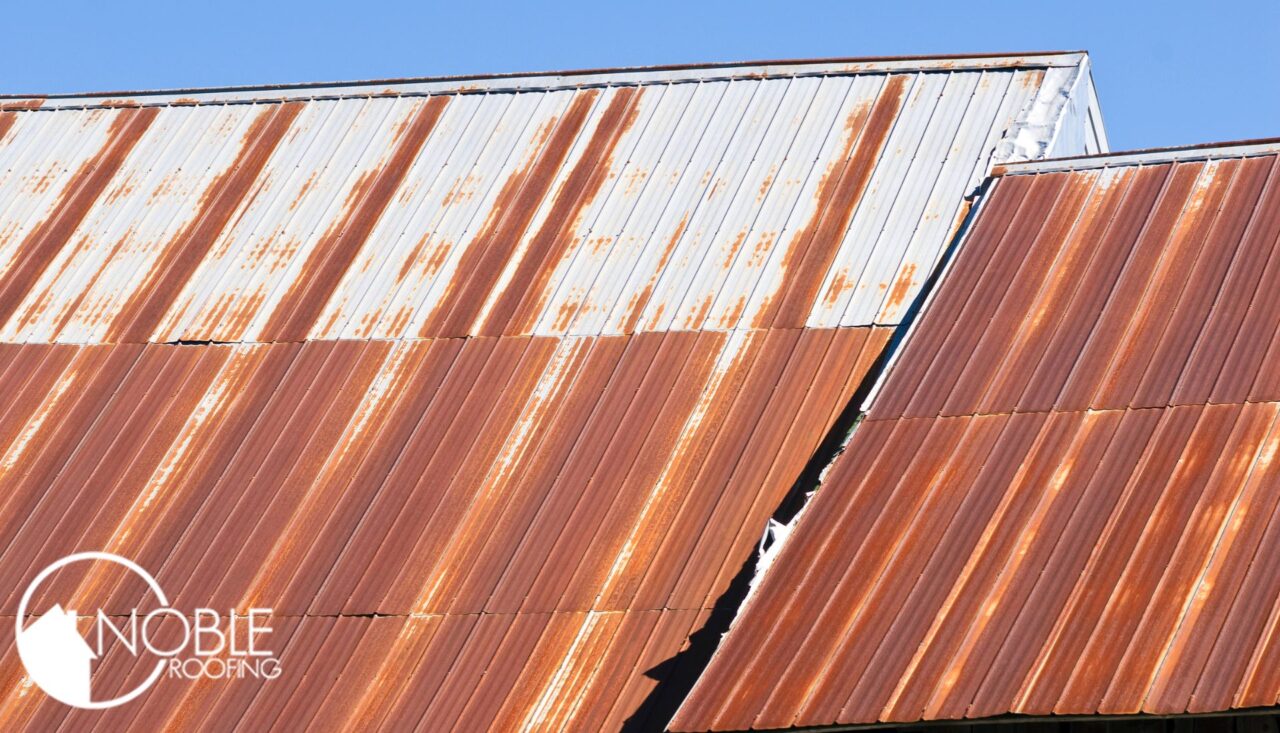
Roof rust is the corrosion that occurs on metal roofs, especially those made from steel or iron. It happens when the metal’s protective finish is compromised and the underlying metal is exposed to water and oxygen. Over time, this reaction creates iron oxide—the reddish-brown flaking you see on the roof surface.
Common rust triggers include:
- Scratched or worn coatings that expose bare metal
- Standing water from poor slope, clogged gutters, or drains
- Coastal salt air or industrial pollutants that accelerate corrosion
- Age-related breakdown of paint or factory finishes (especially on older roofs)
- Lack of regular maintenance and inspections
When Rust Is Mostly Cosmetic and When It’s Serious
Surface rust—light discoloration or small patches that haven’t penetrated deeply—can often be treated and coated before it becomes a bigger problem. Guides on metal roofs note that these early spots usually indicate the protective layer is failing but the metal underneath may still be structurally sound.
Rust becomes more serious when you see:
- Pitting, flaking, or soft spots in panels
- Rust spreading along seams, fasteners, or overlaps
- Leaks, water stains inside, or damp insulation below the rusted areas
- Warped, sagging, or visibly weakened panels
Metal roofing resources emphasize that once rust breaches the protective layer and begins to compromise the panel itself, it can spread more quickly and often requires panel replacement, not just coating.
How to Treat Surface Rust on a Metal Roof
For metal roofs where rust is still in the early stages, step-by-step repair guidance usually recommends:
- Thorough cleaning and prep: Remove loose rust, dirt, and old flaking paint using a wire brush, scraper, or sanding tools. Power-wash the roof carefully, avoiding direct spray into overlaps or under panels. Let the surface dry completely.
- Rust treatment: Use a rust converter or rust-inhibiting product on remaining rusted areas. These treatments stabilize rust and help prevent it from spreading.
- Rust-inhibiting primer: Apply a primer specifically formulated for metal roofs, often zinc-rich or rust-inhibiting, for better corrosion resistance and adhesion.
- Finish with a quality roof coating or paint: Topcoat with a paint or elastomeric roof coating designed for metal roofing. This creates a new moisture barrier and helps protect the roof from future rust.
Experts caution against simply painting over heavy rust without proper prep, as trapped corrosion can continue to spread under the new coating. Good preparation is key to a long-lasting fix.
When Repair Isn’t Enough and Replacement Makes More Sense
Metal roofing guides point out that surface rust can often be managed with coatings and patch repairs, but panel replacement is usually safer and more cost-effective when:
- Rust has penetrated deeply, causing pitting or holes
- Rust is widespread along seams, fasteners, and overlaps
- Panels feel soft, flex underfoot, or show structural compromise
- Leaks are recurring even after patching and coatings
In these cases, continuing to patch over compromised metal can delay the inevitable and may allow hidden corrosion to keep damaging the roof and underlying structure. Replacement can restore the roof’s integrity and provide modern coatings and finishes that resist rust more effectively.
Preventing Rust and Extending Roof Life
Prevention is almost always cheaper than repair. Rust-prevention guidance for metal roofs emphasizes:
- Regular inspections: Check for scratches, chipped paint, standing water, and early rust at least once a year and after major storms.
- Keep gutters and drainage clear: Remove leaves and debris so water doesn’t pool on the roof or at panel edges.
- Maintain protective coatings: Reapply paint or elastomeric coatings as they age or show wear, especially in high-humidity, coastal, or industrial areas.
- Choose quality materials: High-quality galvanized or coated panels, zinc-rich primers, and UV-stable paints offer better long-term rust resistance.
Using these strategies can significantly slow down rust formation and extend the life of your metal roof.
How Noble Roofing Can Help With a Rusty Roof
Rust on your roof is a warning sign, but it doesn’t always mean you need a full replacement right away. The first step is a professional inspection to determine how extensive the corrosion is and whether panels are still structurally sound.
Noble Roofing can:
- Inspect your metal roof for rust, leaks, and structural issues
- Explain whether cleaning, coating, targeted repairs, or panel replacement are appropriate
- Recommend rust-inhibiting primers, coatings, and materials to help protect your roof going forward
If you’re tired of looking at a rusty roof, or worrying about what that rust might mean, reach out for an inspection and a clear plan to restore and protect your roof.