
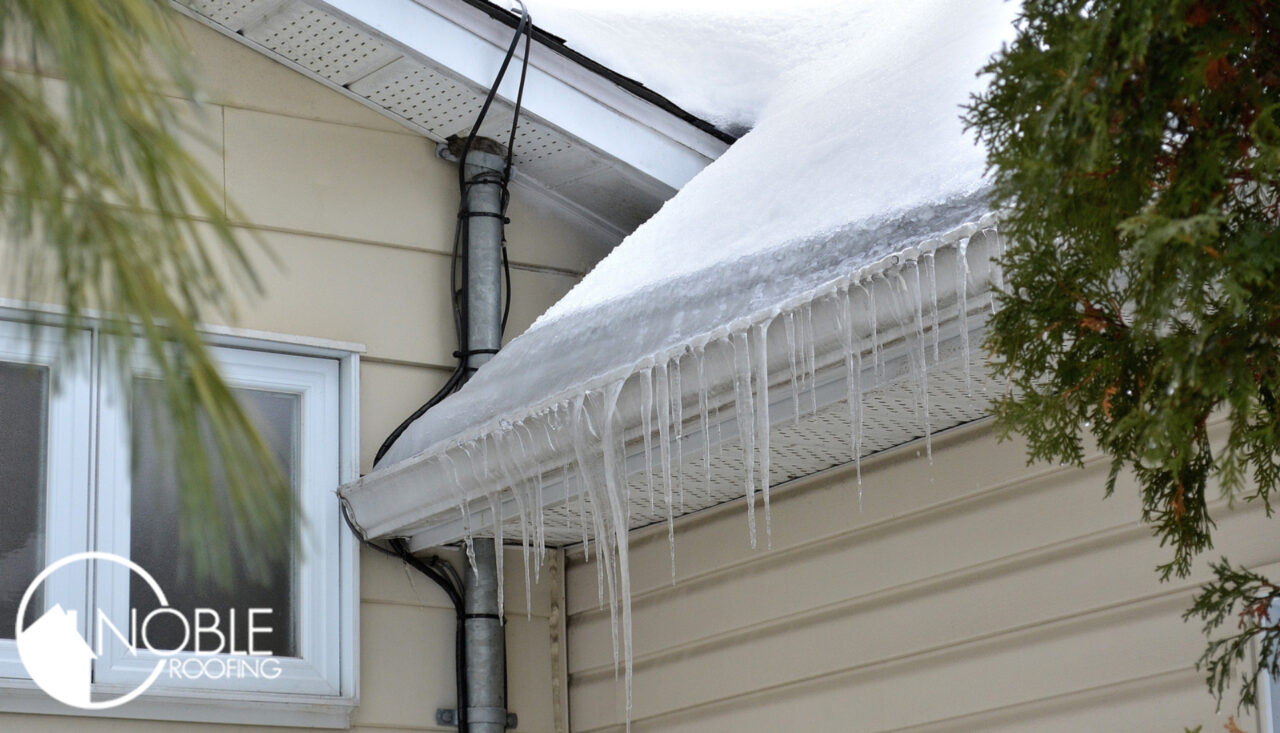
Ice Dams on Your Roof: What Causes Them and How to Prevent Them
An icicle-lined roof can look pretty after a winter storm, but those icicles are often a sign of an ice dam, and these can cause real damage. In Northern Virginia, where winter brings freeze-thaw swings instead of steady cold, ice dams can form several times in one season. Here is what causes them, what they can do to your home, and how to stop them before they start? We will discuss these topics and answer some of your burning questions about them. And, if you have more questions, please contact Noble Roofing, and we’ll be glad to inspect your roof to see if it’s at risk of forming ice dams.
What Is an Ice Dam?
An ice dam is a ridge of ice that forms along the lower edge of your roof, usually right above the gutters. It blocks melting snow from draining off the roof. That water backs up behind the ice, works its way under your shingles, and can leak into your attic, walls, and ceilings.
Why Ice Dams Form
Ice dams are not really a snow problem. They are a heat problem. Here is how it happens:
- Warm air from your living space rises into the attic.
- That heat warms the roof deck and melts the snow on the upper part of the roof.
- Meltwater runs down to the eaves, which hang past the warm part of the house and stay cold.
- The water refreezes at the edge, and the ice ridge grows with each melt.
The main culprits are poor attic insulation, air leaks from the house into the attic, and weak roof ventilation. Clogged gutters make things worse because they give ice a place to build up.
Signs You Have an Ice Dam Problem
- Thick icicles hanging from your gutters or roof edge
- A line of ice along the eaves while the rest of the roof is clear
- Water stains or damp spots on ceilings near outside walls
- Peeling paint or damp drywall after a snowmelt
- Frost or wet insulation in the attic
The Damage Ice Dams Can Cause
Water that backs up under shingles does not stay on the roof. It can soak roof decking, ruin insulation, stain ceilings, and lead to mold. The weight of the ice can also pull gutters loose from the fascia. A single bad winter can turn a small attic issue into a repair bill that touches your roof, gutters, and interior.
How to Prevent Ice Dams
The goal is simple: keep your roof cold and your gutters clear.
- Seal attic air leaks. Gaps around light fixtures, attic hatches, plumbing vents, and chimneys let warm air escape into the attic.
- Add attic insulation. Good insulation keeps heat in your living space, where it belongs.
- Improve roof ventilation. Balanced soffit and ridge vents help keep the roof deck close to outdoor temperature.
- Clean your gutters before winter. Leaves and debris trap water that freezes into ice.
- Ask about ice and water shield. When you replace your roof, a waterproof underlayment along the eaves adds a strong layer of protection against backed-up water.
If You Already Have an Ice Dam: What to Do
Safety first! Do not climb on an icy roof, and do not chip at the ice with a hammer or shovel. You can easily damage shingles or get hurt. A roof rake used from the ground can pull fresh snow off the lower roof and slow new ice from forming. If water is already coming inside, call a roofing professional to assess the damage and find the root cause.
Stop Ice Dams Before Winter Gets Worse
Ice dams are a sign that something in your attic or roof system needs attention. Noble Roofing can inspect your roof, gutters, and ventilation, explain what we find, and recommend the right fix for your home.
Contact us today to schedule an inspection and get a free quote.